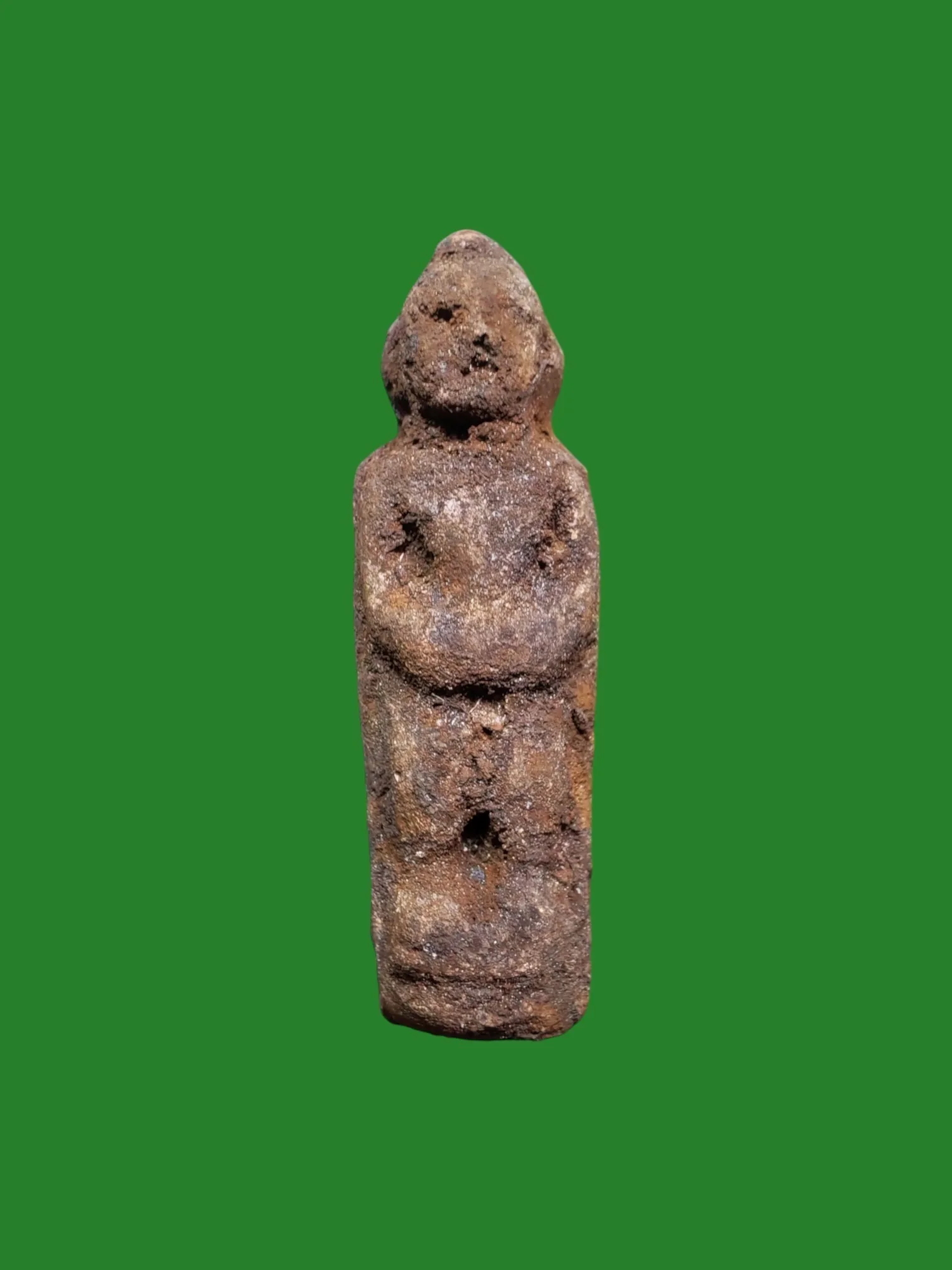
In contemporary global media and commercial entertainment, the Southeast Asian sacred talisman known as Guman Thong (กุมารทอง — Golden Boy) has frequently been distorted through sensationalist horror cinema into an archetype of sinister necro-sorcery. To the serious student of comparative religion, cultural anthropology, and orthodox Theravada Buddhism, however, the authentic monastic consecration of Guman Thong represents an entirely different phenomenon: a sophisticated, highly ethical syncretism of Household Tutelary Devas (Protective Domestic Spirits) anchored in monastic Vinaya discipline, Buddhist meditation on the elements (Chatudhatu), and the canonical doctrine of mutual merit transfer (Pattidana).
1. The Monastic Vinaya: White Magic vs. Dark Necromancy
To understand the genuine tradition of Guman Thong, one must rigorously sever popular folk legend from monastic Buddhist practice:
- The Folkloric Shadow (Khun Chang Khun Phaen): The gruesome narrative of the warrior Khun Phaen cutting an unborn child from his deceased wife Bua Khli and roasting the corpse over an open flame in a sacred hall represents archaic indigenous necromancy (sorcery of the dead). In historical Siamese jurisprudence and monastic law, such heinous actions were abhorred and severely criminalized.
- The Absolute Boundary of the Vinaya Pitaka: A fully ordained Buddhist monk (Bhikkhu) is bound by the 227 Patimokkha rules. Under Parajika Rule 3 (Manussaviggaha), intentional deprivation of human life—including causing the destruction of an embryo or procuring an abortion—incurs immediate, irreparable defeat and immediate expulsion from the Sangha for life. Furthermore, engaging in destructive black magic, blood sacrifice, or corpse desecration violates fundamental monastic prohibitions against vulgar arts (Tiracchana-vijja).
- The Monastic Consecration Mechanism (Phutthakhun): Authentic Buddhist masters never desecrate corpses or bind spirits by force. Instead, monastic consecration is an act of spiritual adoption conducted through pure meditative absorption (Jhana) and loving-kindness (Metta Cetovimutti):
- Invocation of the 32 Bodily Parts (Dwattimsakara): Meditative contemplation recited from head hair (Kesa) to the brain (Matthalungam) to construct an energetic mental matrix.
- Establishment of the Four Primordial Elements (Chatudhatu-vavatthana): Chanting the foundational root syllables Na-Ma-Pha-Tha to endow the matrix with solidity (Earth/Pathavi), cohesion (Water/Apo), warmth (Fire/Tejo), and mobility (Wind/Vayo).
- Compassionate Invitation: Inviting disembodied wandering spirits (Sambhavesi) or terrestrial celestial beings (Bhumma Deva) to take refuge under the Triple Gem, dwell in consecrated clay effigies, and earn celestial merit by aiding an ethical household.
2. Comparative Cultural Anthropology: Universal Domestic Guardians
The practice of propitiating benevolent child or domestic spirits is by no means unique to Siam; it is a universal socio-religious archetype embedded across human civilizations:
- The Roman Empire (Lares Domestici & Familiares): Roman households maintained a dedicated altar called the Lararium in their atrium, offering daily prayers, wine, wheat, and honey to tutelary household spirits (often depicted as youthful deities) to safeguard family prosperity, guard against theft, and bless mercantile endeavors.
- Imperial China (Zao Jun & Jin Tong): Traditional Chinese culture venerates the Kitchen God (Zao Jun - 司命灶君) alongside the Golden Boy (Jin Tong - 金童), who serves as an auspicious child attendant to Guanyin Bodhisattva, symbolizing purity, wealth creation, and domestic protection.
- Japan / Tohoku Region (Zashiki-warashi - 座敷童子): In Japanese folklore, benevolent child spirits inhabit traditional timber storehouses. When treated with hospitality, honor, and gifts, they bestow astonishing wealth and continuous good fortune upon the household lineage.
In Theravada Southeast Asia, Guman Thong serves precisely this sociological function: transforming the psychological fear of the unknown into an intimate guardian relationship based on shared ethical duties.
3. Lineage and Historical Chronicles: Luang Pho Pin of Wat Ubonwannaram (B.E. 2500)
Among the supreme consecrated guardian talismans of central Thailand, the historic creations of Phra Khru Prasitsarakhun (Luang Pho Pin Inthasaro), former Abbot of Wat Ubonwannaram in Damnoen Saduak District, Ratchaburi Province, stand as monumental benchmarks:
- Historical Roots: Born on February 23, B.E. 2444 (1901), Luang Pho Pin was ordained at the age of 21 at Wat Bang Chang Nuea in Nakhon Pathom, an ancient epicenter of Buddhist textual scholarship and spiritual sciences along the Nakhon Chai Si River. He assumed the abbacy of Wat Ubonwannaram in B.E. 2490.
- The Mae Klong Lineage of Luang Pho Khong: Luang Pho Pin was the foremost inner-chamber disciple (Sith Ek) of the legendary Luang Pho Khong Thammachoto of Wat Bang Kaphom (Samut Songkhram), one of Siam's top five Benjapakee coin masters and architect of the celebrated Look Om Mahakan. Luang Pho Pin mastered Luang Pho Khong’s profound fire-kasina contemplation, Jindamani sacred sciences, and compassionate mind-transference.
- The 25th Buddhist Century Milestone (B.E. 2500): Following the devastating hardships of World War II and the Indochina conflicts, Siam celebrated the 2,500th year of the Buddhist Era (B.E. 2500 / 1957). In Damnoen Saduak—a bustling labyrinth of floating markets and waterborne merchant vessels—Luang Pho Pin formulated his legendary Din 7 Pacha Guman Thong to spiritually anchor and revitalize struggling river traders.
- Evolution into Sacred Powders (B.E. 2503): By B.E. 2503, Luang Pho Pin further expanded this lineage by sculpting the iconic Phra Khun Phaen Phuttha Kwak, harmonizing the auspicious gesture of the beckoning Buddha with holy temple chalks and protective parittas.
4. Material Alchemy & Soil Science: De-Mythologizing "Din 7 Pacha"
Few terms have caused as much sensationalist misunderstanding as Din 7 Pacha (ดินเจ็ดป่าช้า — Earth from Seven Cemeteries). In monastic esoteric science, this material formulation has nothing to do with necromancy or bodily remains. It is rooted in profound Buddhist contemplation:
- Cemeteries as Sanctuaries of Contemplation (Asubha Kammatthana): In early Buddhist monasticism, forest charnel grounds (Sivathika) were the highest training grounds for monks to cultivate Marananussati (mindfulness of death) and realize the truth of Anatta (non-self). Soil gathered from these meditation sites carries the ultimate spiritual vibration of detachment from ego.
- Din 7 Tha (Soil from 7 Bustling Trading Piers): Harvested from high-traffic commercial river piers where wealth and people continuously flow, imparting the energetic quality of unhindered commerce.
- Din 7 Pong (Mineral Earth from 7 Wild Salt Licks): Sourced from remote mineral soils where wild animals gather in complete peace without predation, embodying supreme Metta Mahaniyom (universal non-hostility).
- Khlai Sema 7 Wat (Moss from 7 Consecrated Boundary Stones): Scraped from the sacred boundary stones (Bai Sema) of seven royal monasteries, representing the inviolable spiritual shield of the Buddha's monastic boundary.
- 108 Medicinal Herbs & The 5 Sacred Powders: Bound together with natural herbal resins and compounded with the five sacred esoteric powders (Itthije, Pathamang, Maharaj, Trinisinghe, and Buddhakhun), neutralized and purified through continuous Buddhist paritta chanting.
5. De-Mythologizing Devotion: Red Soda vs. Canonical Merit Transfer (Pattidana)
A widespread modern misconception in Southeast Asia is the belief that Guman Thong requires offerings of crimson soft drinks (red Fanta) or childish confections. Anthropological analysis reveals that this was merely an improvised commercial trend originating in Bangkok open-air markets during the 1970s.
Authentic monastic tradition dictates that true veneration requires no bizarre offerings, but rather the practice of Pattidanamaya (บุญกิริยาวัตถุ: ปัตติทานมัย — The Dedication of Meritorious Deeds):
"Whenever the household head performs acts of charity (Dana), maintains moral discipline (Sila), or engages in mindful breath meditation (Bhavana), dedicating the fruits of those virtues to the guardian spirit elevates its celestial frequency from a humble terrestrial spirit into a radiant higher Deva. It is this symbiotic moral bond that generates true protective prosperity."
6. Curated Archival Specimens: Comparative Lineage Matrix
The Dan Siam Heritage Archive curates four historic, certified specimens that trace the evolutionary trajectory of Southeast Asian guardian talismans across four decades:
| Specimen / Master | Year / Era | Material Matrix | Theological / Lineage Focus |
|---|---|---|---|
| LP Pin Wat Ubon (REF: #1737) | B.E. 2500 (1957) | Din 7 Pacha, Din 7 Tha, Khlai Sema, Herbal Powders | Mae Klong river commerce, Asubha contemplation, White Deva blessing |
| Phra Khun Phaen Phuttha Kwak LP Pin (REF: #1736) | B.E. 2503 (1960) | Sacred Itthije chalk, 108 flower pollens, holy temple dust | Beckoning mudra of the Buddha, mercantile attraction, Metta Mahaniyom |
| LP Thammarangsi Somdej (REF: #1735) | B.E. 2540 (1997) | 108 Khmer mountain herbs, consecrated LP Tim Rayong powders | Isan-Cambodian borders, Vipassana integration, protective charisma |
| Khun Phaen Kumarn LP Suang (REF: #1640) | B.E. 2519 (1976) | Ancient Khmer temple sanctuary earths, sacred relic clays | Ascetic Tejo-Kasina elemental mastery, miraculous obstacle removal |
- Vintage Guman Thong Din 7 Pacha Luang Pho Pin Wat Ubon B.E. 2500 [REF: #1737] — 1,200 THB. The premier Mid-Century Mae Klong basin guardian artifact in natural cemetery earth.
- Phra Khun Phaen Phuttha Kwak Luang Pho Pin Wat Ubon B.E. 2503 [REF: #1736] — 800 THB. Consecrated holy powder formulation featuring the rare beckoning Buddha mudra.
- Phra Khun Phaen Guman Thong Somdej Thammarangsi B.E. 2540 [REF: #1735] — 600 THB. Infused with Luang Pu Tim Wat Lahan Rai consecrated powders and Cambodian mountain herbs.
- Khun Phaen Sitting Kumarn Luang Pu Suang Wat Phai Phattana B.E. 2519 [REF: #1640] — 700 THB. Historic creation by the legendary recluse of the Phanom Dong Rak mountains.