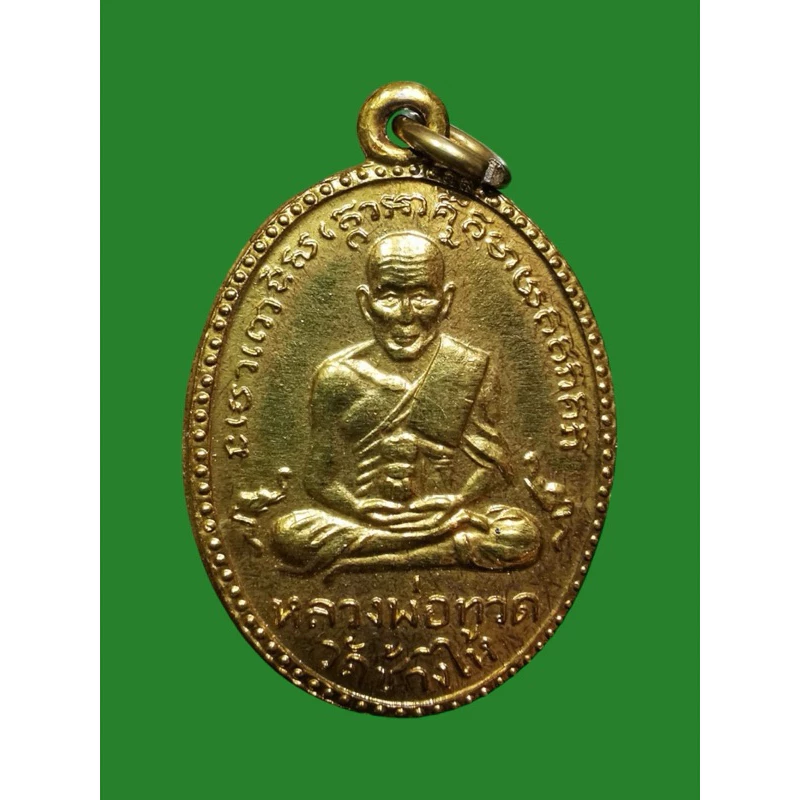
In the academic study of Thai numismatics and Buddhist history, Luang Phu Tuad (historically entitled Somdej Chao Phะ Koh) is far more than a folk legend of Southern Thailand. His life is corroborated by historical records and monastic appointment rolls dating back to the Ayutthaya Kingdom during the reign of King Ekathotsarot (reigned 1605–1620 C.E.).
1. Historical Documentation in the Royal Ayutthayan Chronicles
According to royal chronicles and provincial records of Phatthalung and Songkhla, the monk originally named Pu was born in Sathing Phra. Demonstrating exceptional mastery over the Vinaya (monastic discipline) and Tipitaka, he journeyed to the royal capital of Ayutthaya to reside and pursue advanced scriptural studies at Wat Rachanuwat.
Historical annals record that during a significant theological challenge posed by foreign ambassadors regarding the translation of the 84,000 chapters of the Abhidhamma scriptures, Venerable Pu successfully resolved the sacred doctrinal puzzles. In royal recognition of his wisdom and spiritual virtue, King Ekathotsarot conferred upon him the ecclesiastical title of "Somdej Phra Rajamuni Samiramaguna", one of the highest monastic honors in the kingdom, before the venerable elder returned to restore Buddhist institutions in Southern Thailand.
2. The Cultural Geography of Pattani and Wat Chang Hai
The historical bond between Luang Phu Tuad and Wat Rat Burana (Wat Chang Hai) in Khok Pho District, Pattani, serves as a vital cross-cultural heritage nexus between Siam and the Malay Peninsula.
Local historical accounts indicate that after years of wandering as an ascetic forest monk (Dhutanga), Luang Phu Tuad was invited by the ruler of Sai Buri to establish spiritual residence at Wat Chang Hai. Upon his peaceful attainment of Parinirvana, his holy relics were enshrined within the Cetiya Stupa of Wat Chang Hai, adjacent to the railway line, establishing the temple as a paramount pilgrimage sanctuary revered across Thailand, Malaysia, and Singapore for centuries.
3. The Mid-20th Century Renaissance: Phra Ajahn Tim's Noble Purpose
Following periods of neglect, Wat Chang Hai was revived in 1941 when Phra Kru Wisaisophon (Phra Ajahn Tim Dhammatharo) assumed the abbotship. Confronted with dilapidated buildings and impoverished local children lacking schooling, Ajahn Tim partnered with prominent local philanthropist Khun Anan Khananurak to cast the historic inaugural B.E. 2497 (1954) holy powder edition.
The consecration had strictly philanthropic objectives:
- Funding the construction of the main Ordination Hall (Ubosot) of Wat Chang Hai.
- Building public schools for local underprivileged youth.
- Providing spiritual solace and mindfulness to public servants working in frontier territories.
Following this monumental restoration, Ajahn Tim initiated the commemorative metallic editions, notably the Edition 2 Coin of B.E. 2502 (1959):
Post-War Metallurgy Context: In addition to copper, the 2502 edition utilized historical lightweight food-container aluminium with vintage gold electroplating. Resilient against oxidation, this specific metallurgical specimen provides collectors today with an irreplaceable artifact reflecting mid-century Thai post-war manufacturing history.
4. Theological Perspective: Mindfulness Over Superstition
In Theravada Buddhist philosophy, the legendary reputation of Luang Phu Tuad amulets for "Klaew Klad" (Safe Journeys and Accident Protection) does not stem from fatalistic sorcery. Instead, it operates on the foundational Buddhist principle of Buddhanussati (Mindful Contemplation of the Enlightened):
- Awakened Vigilance: When wearing a consecrated representation of a moral master, the devotee is constantly reminded of moral restraint, sobriety, and conscious awareness during travel.
- The Law of Kamma: As proclaimed in the Buddhist scriptures: "Dhammo have rakkhati dhammacarim" (The Dhamma protects those who live righteously). Devotees imbued with loving-kindness (Metta) naturally avoid perilous circumstances.
5. Why Singapore & Malaysian Collectors Venerate Luang Phu Tuad
Maritime merchants and ethnic Chinese communities across the Malay Peninsula have traded with Southern Thailand for centuries. Experiencing repeated safe travels across maritime borders and flourishing businesses grounded in ethical merit, Luang Phu Tuad emerged as the foremost talisman for "Ultimate Life Protection" and executive peace of mind across Singapore, Kuala Lumpur, and Penang.
• Luang Phu Tuad Wat Chang Hai Coin Edition 2 B.E. 2502 (Mai Malay Block, Gilt Aluminium) [REF: #38]
• Luang Phu Tuad Pim Phra Rod 5 Kings B.E. 2542 Blessed by Luang Pu Moon Wat Ban Jan [REF: #37]