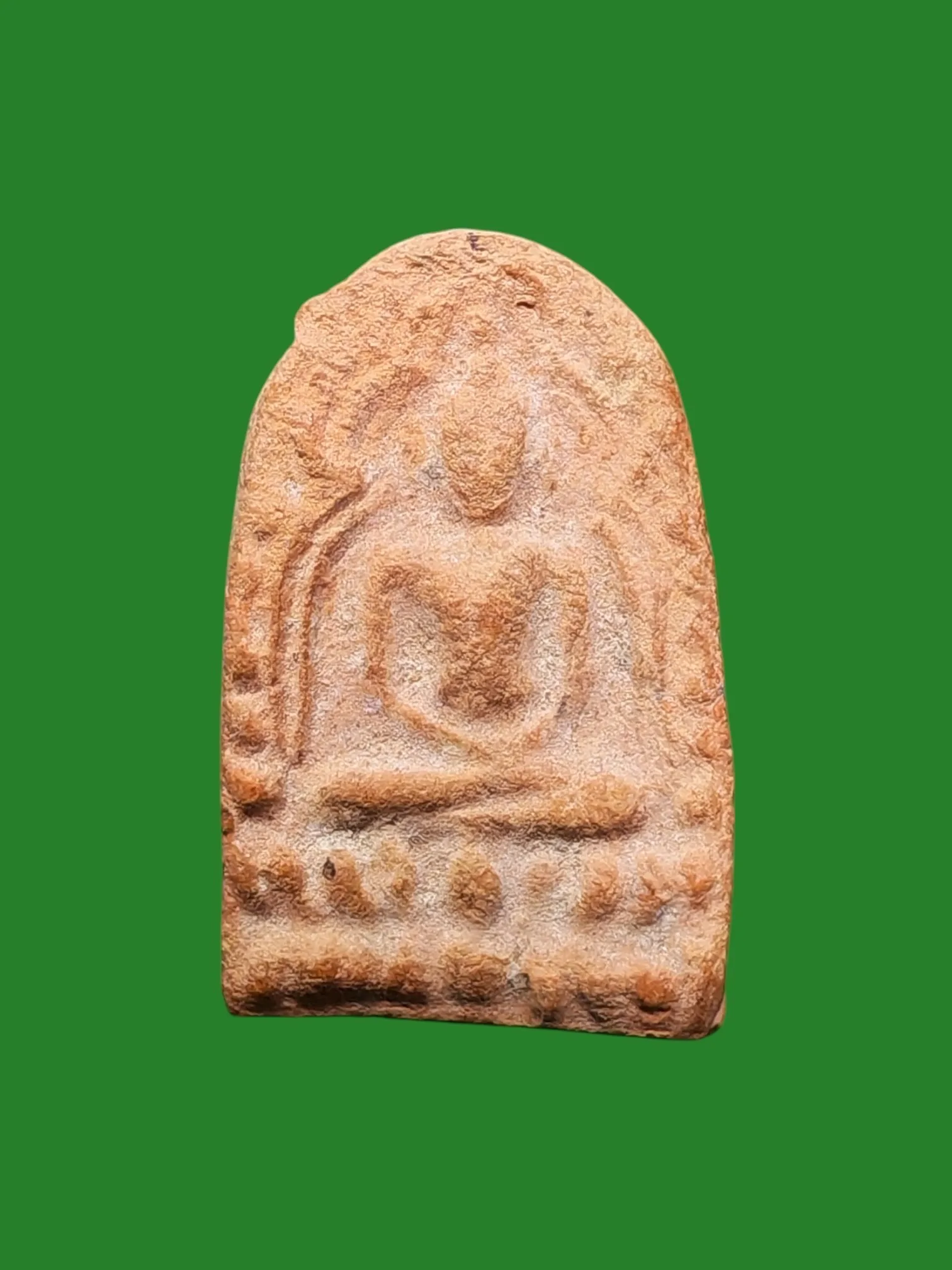
Within the supreme pantheon of Siam’s sacred votive masterpieces known as the Benjapakee Grand Quintet, if Phra Somdej Wat Rakang reigns as the King of Amulets and Phra Nang Phaya as the Queen, the arch-topped terracotta tablet hailing from the plains of Kamphaeng Phet, renowned as “Phra Soom Kor”, stands peerless as The Supreme Talisman of Eternal Wealth and Inexhaustible Prosperity.
Yet the immortal declaration inscribed on ancient gold plates—“Possess Me and Never Lack” (มีกูไว้ไม่จน)—is constantly cheapened by commercial superstition into a passive lottery charm or fantasy of instant riches without labor. This scholarly treatise unites epigraphy, forensic soil petrology, and Theravada soteriology to travel back to 19th-century Rattanakosin and 14th-century Sukhothai, deciphering the true archaeological discovery made by Somdej Toh, the mineralogical reality of tamarind inclusions, and the timeless ethics of spiritual wealth.
1. Genesis of Thung Setthi: The Rediscovery of the Golden Inscription in B.E. 2392
The historical emergence of Phra Soom Kor is deeply intertwined with the greatest patriarch of Siamese Buddhism. In B.E. 2392 (1849 C.E.), toward the close of King Rama III’s reign, Somdej Phra Buddhachan (Toh Promrangsi)—then holding the monastic title of Phra Maha Toh—traveled north to visit relatives in the ancient fortified city of Kamphaeng Phet (historically known as Chakangrao).
On the western bank of the Ping River in Nakhon Chum subdistrict, Somdej Toh inspected the monumental ruins of three ancient stupas at Wat Phra Borommathat Nakhon Chum, whose brick spires had collapsed under the weight of centuries. During the clearing of the crypts for reconstruction, the monastic council unearthed an extraordinary treasure: inscribed Sukhothai-Khom golden manuscript plates (จารึกลานทอง) alongside thousands of hardened terracotta votive tablets interred deep within the stupa chambers.
Somdej Toh meticulously transliterated and decoded the ancient golden plates in collaboration with senior scriptural masters. The inscription recorded the royal consecration of the great stupa and the enshrinement of authentic Buddha relics by Phra Maha Thera Piyadassi and the sovereign monarchs of the Sukhothai Dynasty (attributed to King Maha Thammaracha I, Phaya Lithai, circa 1357 C.E.), explicitly chronicling the spiritual virtues and prophetic blessings of the sacred tablets.
2. Hermeneutics of the Inscription: “Possess Me and Never Lack” as Spiritual Wealth
The iconic inscription that echoes across Siamese lore reads:
“...Whosoever possesses Me shall never fall into poverty. The veneration of this sacred image shall multiply riches, status, honor, and freedom from all perils...”
From the standpoint of Theravada hermeneutics and Buddhist epistemology, the first-person pronoun “Me” (กู) does not refer to the material lump of clay. It denotes The Supreme Buddha and the Noble Dhamma (Buddhanussati - Constant Mindfulness of the Enlightened One).
The ancient masters embedded a profound spiritual teaching: an individual who holds the Buddha steadfast in their heart naturally abandons vices, remains morally awake, and actively practices the four foundational principles of worldly success taught in the Pali Canon—the Diṭṭhadhammikattha-saṃvattanika-dhamma (popularly known as the Millionaire’s Heart Code “U-A-Ka-Sa”):
- Uṭṭhāna-sampadā (U): Tireless industry, diligence, and mastery in righteous, honest vocation.
- Ārakkha-sampadā (A): Vigilant stewardship and prudent preservation of hard-earned wealth against leakage and squandering.
- Kalyāṇamittatā (Ka): Cultivating virtuous, noble associations while shunning deceitful, reckless companions.
- Samajīvitā (Sa): Balanced living, living prudently within one’s means without extravagant excess or paralyzing stinginess.
One who embodies these four principles is structurally incapable of falling into destitute ruin in any era. This is the authentic, unshakeable meaning of “Possess Me and Never Lack”—not a magic talisman that rewards indolence.
3. Classic Sukhothai-Lankan Iconography: The Bamboo Grove Arch and Dhyana Mudra
The sacred art of Phra Soom Kor represents the pinnacle of Classical Sukhothai Votive Sculpture (14th–15th Century C.E.), harmonized with aesthetic currents from Sri Lankan Theravada monasticism:
- The Ornamental Kank-Kha Arch (ซุ้มกนก): The Buddha sits enshrined within an ornate decorative arch resembling curling acanthus or stylized bamboo fronds curving gracefully overhead. The lush, upward-swirling filigree symbolizes perpetual growth, flourishing fertility, and inexhaustible vitality, giving rise to the modern name “Soom Kor” (The Arch Grove).
- Dhyāna Mudrā (Meditation Posture): Seated in tranquil virasana (half-lotus), the right hand rests gently atop the left hand on the lap, palms turned upward. The expansive chest and refined silhouette emanate an aura of profound equanimity, representing absolute transcendence over mental afflictions.
- Oval Contours and Lotus-Bud Usnisa: The serene, oval face features downcast almond eyes radiating boundless compassion, elongated earlobes sweeping toward royal shoulders, and a flame-shaped lotus-bud halo (Rasami) crowning the usnisa.
- Mold Typologies: Archaeological excavations at Thung Setthi revealed multiple distinct formats: Phim Yai (Large Mold with Kanok), Phim Yai Mai Mee Kanok (Large Smooth Mold / Soom Kor Dam), Phim Klang (Medium Mold), and Phim Lek (Small Miniature Mold).
4. Forensic Petrology of Kamphaeng Phet Clay: Deconstructing Hematite & Manganese Patina
Centuries of amulet trading folklore attributed mysterious powers to “Wan Dok Makham” (Tamarind Flower Herbs) appearing on the surface of authentic tablets. Modern geological science and forensic petrology illuminate the empirical reality:
- The Reality of "Wan Dok Makham" (Hematite & Limonite Concretions): Organic herbal leaves exposed to ancient kiln firings (700°C–900°C) inevitably carbonize into ash. The distinctive micro-specks of brilliant brick-red and burnt-orange scattered throughout genuine Phra Soom Kor are in fact natural iron oxide concretions (Hematite - Fe₂O₃ and Limonite) present within the ancient alluvial silt deposits of the Ping River floodplains. When subjected to an oxidizing kiln atmosphere, these iron mineral particles bake into vivid reddish-orange inclusions resembling tamarind blossoms.
- Authentic Black Patina (Manganese Oxide Dendrites): The dark, indelible staining and dendritic black spots rooted inside the pores of the clay matrix are not living mold, but Manganese Oxide (MnO₂) complexes bonded with prehistoric plant-oil binders (tamarind seed sap and natural tree resins) utilized by ancient potters. Preserved in sub-terrene crypt humidity for over six centuries, these mineral precipitates become an integral, immovable part of the silicate matrix that can never be dissolved or artificially painted.
- Velvety Clay Matrix (Nueng Nuat): Sourced from fine river basin silt blended with pulverized sacred pollen and volcanic river clay, the aged paste exhibits a soft, supple tactile texture known as "Velvety Clay" (เนื้อหนึกนุ่ม), sliding smoothly under touch like fine organic soapstone.
5. Certified Archival Specimens in Dan Siam Heritage Collection: 3 Consecrated Lineages
The Dan Siam Heritage Research Archive preserves three distinguished museum-grade examples of the Phra Soom Kor votive lineage, rigorously verified for historical authenticity:
🏛️ Specimen I: [REF: #1589] Phra Soom Kor Baked Clay Tablet, Chao Khun Pho Wat Chaiyaphruekmala B.E. 2495
Archive Reference: REF: #1589 | Provenance: Consecrated with genuine crushed Thung Setthi ancient crypt materials
Consecrated by Venerable Chao Khun Pho, the erudite Abbot of Wat Chaiyaphruekmala along the historic Bangkok Noi canal. He systematically gathered fragmented authentic Kamphaeng Phet ancient clay tablets, re-pulverizing them with holy powders to press this historic B.E. 2495 commemorative edition. Features a velvety, supple clay body studded with genuine iron oxide micro-inclusions and natural dry surface patina.
👉 View Studio Macro Photography & Material Specifications [REF: #1589]
🏛️ Specimen II: [REF: #133] Phra Soom Kor Camp Adisorn B.E. 2514, Consecrated by Luang Pu Tim Wat Lahan Rai
Archive Reference: REF: #133 | Provenance: Grand Maha Chakraphat Consecration Ceremony at Saraburi Military Camp
Cast and pressed for the monumental B.E. 2514 Saraburi ceremony, bringing together the absolute titan masters of mid-20th century Siam: Luang Pu Tim of Wat Lahan Rai, Luang Pu Toh of Wat Pradu Chimphli, Luang Pho Kuay of Wat Kositaram, and Archan Nam of Wat Don Sala. Features sharp classical arch definitions, a taut dry clay surface, and intense multi-master empowerment.
👉 View Studio Macro Photography & Ceremony Archives [REF: #133]
🏛️ Specimen III: [REF: #181] Phra Sangwarānuwongthera (Chum) Phra Soom Kor, Wat Plab B.E. 2460
Archive Reference: REF: #181 | Provenance: Direct vipassana meditation lineage of Somdej Suk Kai Thuean
Consecrated by the 15th Abbot of Wat Ratchasittharam (Wat Plab), Chao Khun Sangwarānuwongthera (Chum), an acknowledged grand master of esoteric Theravada internal meditation. Crafted from sacred baked clay blended with incised palm-leaf scripture ashes and ancient crypt powders. An exceedingly scarce Rattanakosin masterwork possessing formidable meditative power.
6. Demolishing Commercial Myths: Does Wearing Phra Soom Kor Create Wealth Without Labor?
One of the most corrosive fallacies in contemporary esoteric commerce is the proposition that merely donning a Phra Soom Kor tablet causes money to materialize without physical labor or ethical enterprise. Classical Buddhist doctrine unequivocally rejects this:
- The Inviolability of Kamma and Dependent Origination (Idappaccayatā): Buddhism completely repudiates spontaneous fatalism or supernatural entitlement. Every effect requires a commensurate cause. If an individual engages in indolence or dishonest deceit, no external artifact can generate authentic prosperity. The Buddha taught that wealth is the direct karmic fruition of honest industry, generosity, and wisdom.
- The Amulet as a Psychological Anchor and Calibrator: The true power of Phra Soom Kor operates as an exquisite psychological anchor (Mindfulness Catalyst). When wearing this sacred emblem, the bearer is continually reminded of monastic calm and ethical clarity. By tranquilizing subconscious anxiety, the mind enters a state of focused composure, enabling astute business appraisal, confident negotiation, and resilient leadership.
7. Epilogue: The Spiritual Inheritance of Moral Wealth and Devotional Praxis
The eternal value of Phra Soom Kor from the sacred soils of Kamphaeng Phet does not reside in speculative secondary market pricing, but in its living transmission of moral prosperity forged six centuries ago by the sovereigns and monks of Sukhothai.
When reverently wearing Phra Soom Kor, let it serve as a solemn covenant with righteousness, wisdom, and unfaltering perseverance. Whosoever walks this noble path shall experience an inner and outer flourishing as vibrant as the eternal golden arch that never withers—fulfilling the true prophecy of the golden plates: “Possess Me and Never Lack.”