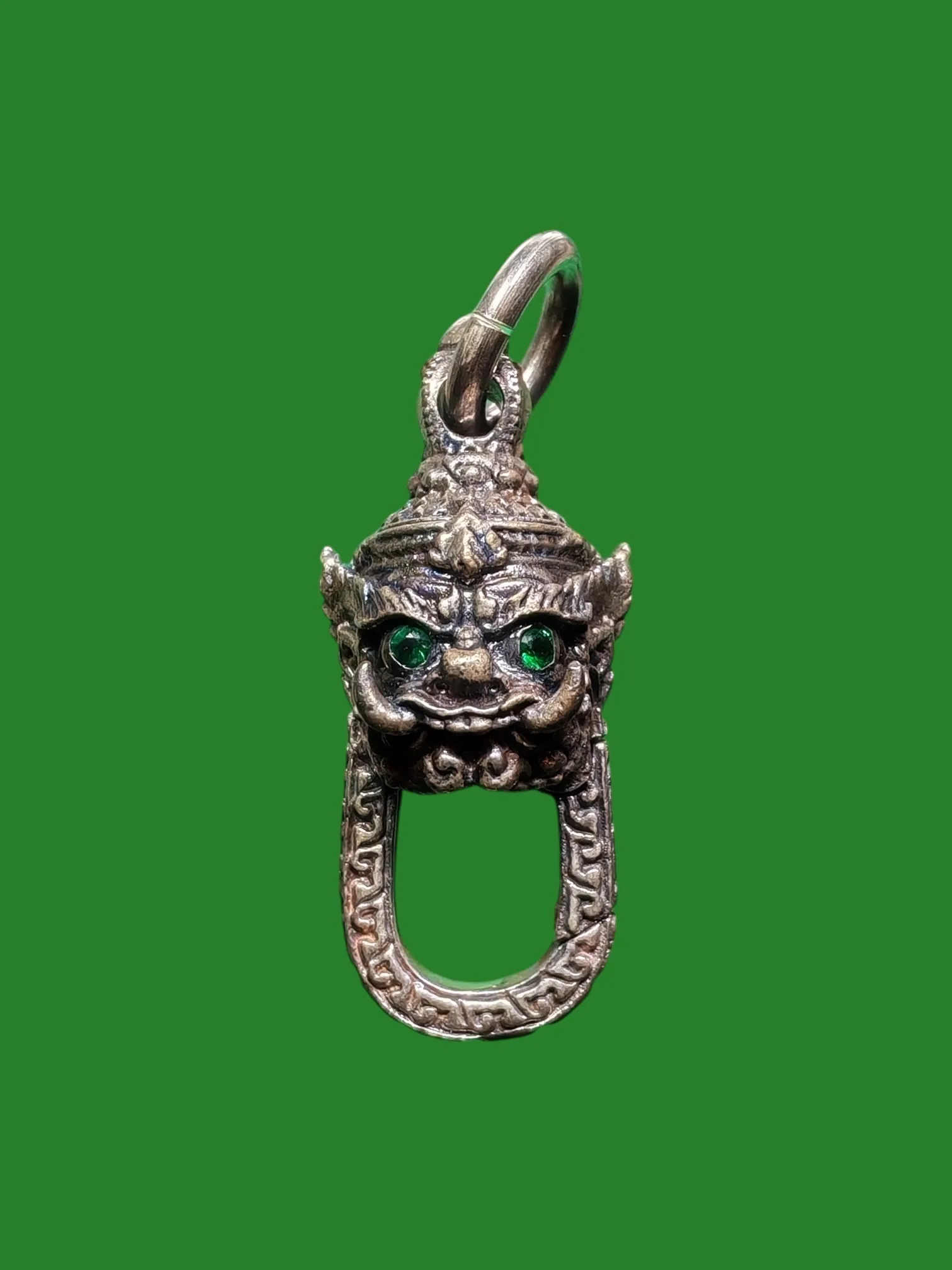
In the sacred architecture of Siamese royal monasteries, few iconographical figures evoke greater spiritual gravitas than Thao Wessuwan (Vaisravana / Vessavana), standing vigilantly at temple porticos, leaning solemnly upon his formidable club. In modern commercial folklore, however, his persona is frequently obscured by sensationalist superstition, talismanic hype, and flashy market rituals. A rigorous historical, scriptural, and archaeological inquiry reveals a profound theological evolution: the transformation of the Vedic deity Kubera into an enlightened Buddhist Arya disciple, sovereign protector of the Northern Celestial Quarter, and patron of ethical conduct.
1. From Vedic Kubera to Buddhist Vaisravana: Cosmological Elevation
In Vedic literature and ancient Hindu tradition, the entity is recognized as Kubera, lord of subterranean wealth and chthonic treasures. The Sanskrit root Ku-bera historically conveyed "ill-formed" or "deformed body"—in early Gandharan and Mathuran stone reliefs, Kubera was depicted as a dwarfish, pot-bellied figure with three legs and eight teeth, seated upon a man (Nara-vahana) or bearing an ichneumon (jeweled mongoose) at Mount Kailash’s city of Alaka.
With the rise of Early Buddhism, the Pali Canon systematically restructured this cosmology. In the Sutta Pitaka, he emerges under the Pali designation Vessavana (Sanskrit: Vaisravana, "Son of Visrava" or sovereign of the capital Visana). Rather than a distorted earthly gnome, Vessavana is elevated as the supreme chief among the Catumaharajika (Four Great Heavenly Kings), ruling the Northern Celestial Realm on the northern slopes of Mount Sumeru (Sineru), commanding the hosts of Yakkhas, Raksasas, and Kumbhandas.
2. Yaksha Ontology in Theravada Cosmology: Devas, Not Asuras
A prevalent theological error in popular culture is the misidentification of Yakshas as demonic Asuras.
- Asuras: As delineated in the Paramatthajotika, Asuras inhabit the subterranean abyss beneath Mount Meru’s ocean bed, historically cast down as perennial adversaries of Sakka (Indra) and the Tavatimsa Devas.
- Yakshas (Yakkhas): In canonical Theravada, Yakshas are classified as Bhumma-devas (Terrestrial Deities) and Rukkha-devas (Arboreal Deities) within the Catumaharajika realm. They possess subtle astral bodies, celestial mansions (vimana), and varying degrees of radiance.
Crucially, the Digha Nikaya Commentary (Sumangalavilasini) certifies that Thao Wessuwan is an established Sotapanna (Stream-Enterer)—a noble disciple firmly anchored on the path to liberation, having eradicated identity view, skeptical doubt, and attachment to mere rites. He is a defender of the Sasana who took a solemn vow before Gautama Buddha to protect monastic practitioners for five millennia.
3. The Atanatiya Sutta on Vulture Peak: Scriptural Origin of Suad Bhan Yak
The definitive primary source defining Thao Wessuwan’s ecclesiastical mandate is the Atanatiya Sutta, preserved in the Digha Nikaya Patikavagga (Volume 11, Items 207–217). The discourse records that deep in the night atop Vulture Peak (Gijjhakuta) near Rajagaha, the Four Heavenly Kings arrived in blazing illumination with an immense celestial retinue.
Thao Wessuwan formally approached the Exalted One, observing that the vast majority of coarse, lower-ranking Yakshas had no affinity for the Buddha’s teachings, because the Dhamma strictly enjoins abstention from slaughter, theft, sexual misconduct, lying, and intoxication—virtues inherently antithetical to uncultivated demonic impulses. When solitary monks, nuns, and lay followers meditated in wilderness forests, they were constantly harassed by unruly non-human entities.
To resolve this spiritual impediment, Thao Wessuwan formally gifted the Atanatiya Paritta (The Protective Covenant of Atanata) to the Buddha, codifying a divine mandate: should any errant spirit assault a practitioner chanting this discourse, that entity would be cast out from celestial assemblies, punished by planetary forces, and denied communion among spirits.
In Siamese royal tradition dating from Ayutthaya through the early Rattanakosin era, this canonical account gave birth to the solemn Sampat-chara-chint Royal Cleansing Ceremony. Monastic assemblies recited the Suad Bhan Yak (the fierce, authoritative delivery of the Atanatiya verses) synchronized with the ceremonial firing of royal palace cannons to purge plagues, demonic contagion, and negative celestial alignments at the turn of the new year.
4. The Gada Mace: One of the Four Supreme Weapons of the Universe
According to the Sumangalavilasini, the Pali commentary to the Digha Nikaya, four celestial weapons possess absolute destructive dominion across the three worlds:
- Vajiravudha: The Thunderbolt of Sakka Devaraja (Indra).
- Nayanavudha: The Fiery Gaze of Yama, King of the Netherworld.
- Dussavudha: The Mystic Cloth Mantle of Alavaka Yaksha.
- Gadavudha: The Celestial Mace (Club) of Thao Wessuwan.
Commentarial lore records that if Vaisravana’s Gada is discharged, its kinetic impact can pulverize armies of corrupt spirits into fine dust. In Siamese temple art, master sculptors fused this mighty weapon with sovereign royal regalia (Chada crowns and golden chest plates), planting the club firmly into the earth as an eternal seal of unshakeable righteousness.
5. Siam’s First Portable Castings: Chao Khun Sri (Sondh) Wat Suthat (B.E. 2490–2493)
In Thai amulet history, the earliest miniature cast metal Thao Wessuwan statuettes designed for individual veneration were created by Phra Sunthorn Seelsamajarn (Chao Khun Sri Sondh Yatitharo), the prime ecclesiastical disciple of Somdej Phra Sangkharat (Phae) at Wat Suthat Thepwararam.
Between B.E. 2490 and 2493, as the Kingdom of Thailand dispatched soldiers of the 21st Combined Regiment (the renowned "Little Tigers" battalion) to the grueling sub-zero combat zones of the Korean War, Chao Khun Sri (Sondh) consecrated the historic first-generation cast Thao Wessuwan statues.
Crafted using antique bronze sprues (Chanuan) from Somdej Pae's sacred Phra Kring batches, inscribed with the Yant Solos Maha Mongkol and Atanatiya paritta formulas, and cast via traditional clay double-molds in both demonic-face (Na Yak) and celestial-face (Na Thevada) iterations, these artifacts represent the undisputed Emperor of all Siamese Thao Wessuwan Cast Sculptures.
6. The Modern Renaissance: Luang Pho Itt & The Iconic B.E. 2545 Wat Chula Mani Milestone
In the late 20th and early 21st centuries, the definitive epicenter of Thao Wessuwan devotion shifted to Wat Chula Mani in Amphawa, Samut Songkhram Province, presided over by Phra Khru Sophitwiriyaphorn (Luang Pho Itt Bhaddacaro), who inherited the mystical lineage of Luang Pho Nueang.
In B.E. 2545 (2002), Luang Pho Itt orchestrated a historic turning point with the casting of the First Edition "Rian Champi" Thao Wessuwan Coin. Styled in the graceful teardrop silhouette of the Michelia alba leaf (Dok Champi), featuring an exquisite rendering of Thao Wessuwan standing atop the demon visage and inscribed with ancient sacred cabalistic seals, this design became the universal aesthetic archetype across Asia.
In that exact same B.E. 2545 imperial grand consecration ceremony, Wat Chula Mani also inaugurated the renowned Eight Immortals Fan Coin (Rian Phat Paed Sian B.E. 2545), harmonizing Taoist esoteric astrology with Siamese Theravada protective consecration.
7. Deconstructing Modern Superstition: Canonical Devotion vs Commercial Red Flowers
In contemporary society, a sensationalized ritual trend has taken deep root: offering "nine red roses, nine red incense sticks, and red syrup drinks" before Thao Wessuwan shrines. Rigorous historical critique clarifies this phenomenon:
Scriptural Fact: The practice of offering red flowers, red incense, or raw red substances is completely absent from the Tipitaka, the Pali Commentaries, and ancient Siamese royal court manuals. It is a purely commercial fabrication initiated by street vendors around major temples in the post-2550 B.E. era, borrowing folk misconceptions that Yakshas thrive on blood and raw flesh.
Because Thao Wessuwan is an authentic Sotapanna Noble Disciple established in impeccable ethical virtue, presenting raw or blood-mimicking offerings is fundamentally degrading to his sublime status.
Authentic Buddhist Veneration Consists Of:
- Pure Physical Offerings: White lotus blossoms, fresh jasmine, clean water, natural beeswax candles, and fragrant botanical incense.
- Devatanussati (Mindfulness of Heavenly Virtues): Contemplating Hiri (moral shame) and Ottappa (dread of unwholesome karma)—the two foundational virtues that lead beings to celestial rebirth.
- Observance of the Five Moral Precepts: Thao Wessuwan only favors and protects those who uphold honesty, refrain from exploitation, and practice Right Livelihood.
- Pattidana (Dedication of Merit): Performing Dana, chanting sacred suttas, cultivating Vipassana meditation, and dedicating the resultant merit directly to Thao Wessuwan and his celestial guardians.
🏛️ Dan Siam Curated Archival Specimens:
This historical analysis is corroborated by verified physical specimens from the Dan Siam Amulets Permanent Archive:
- • Eight Immortals Fan Amulet by Luang Pho Ith, Wat Chula Mani, B.E. 2545, Copper [REF: #1508] — Blessed in the historic B.E. 2545 Grand Consecration Ceremony at Wat Chula Mani, in the identical sacred rite as the legendary first-edition Champi Thao Wessuwan medallion.
- • Thao Wessuwan Deity Amulet Brooch & Clasp in Solid 92.5% Silver with Enamel [REF: #1493 / #1500] — Handcrafted archival talisman featuring the protective guardian iconography of the Northern Celestial King.
- • Takroh Pendant with Thao Wessuwan Head Design, 92% Silver, 8 Grams [REF: #1488] — Classical Siamese casting representing the wrath-transcending facial iconography of Vaisravana.
- • Phra Chai Watthana, Wat Suthat Thepwararam, Mixed Old Chanuan Bronze [REF: #1502] — Direct lineage metal casting from Wat Suthat, the historical sanctuary where Chao Khun Sri (Sondh) cast Siam's first Thao Wessuwan statuettes.